 Saleem
Measuring blood pressure at home: preparation, method and a week of readings
Simple steps to measure blood pressure the same way every time at home, and how the blood-pressure week in Saleem leads to a clear average for your doctor.
A blood pressure reading at the clinic is a single moment, and the journey, the wait and nerves can all affect it. Regular readings at home give your doctor a wider picture. To be useful, though, every measurement should be taken the same way.
Before you measure
These are general steps for making measurements more consistent. Always follow your doctor's instructions and your device's manual first:
- Avoid coffee, smoking and exercise for half an hour before measuring.
- Use the toilet first if you need to.
- Sit quietly for five minutes with your back supported and your feet flat on the floor.
While you measure
- Put the cuff on your upper arm, directly on the skin rather than over clothes, and use a size that fits your arm.
- Rest your arm on a table so the cuff is level with your heart.
- Do not talk or move during the measurement.
- Take two readings about a minute apart, and use the same arm every time.
Log the reading in Saleem
Tap the "Blood pressure" tile, type the upper and lower numbers, and your pulse if you like, then pick the moment: morning, evening or another time. Saleem describes the reading in one word, low, normal, needs attention or high, using general adult ranges. The word is for tracking, not a diagnosis.
The blood-pressure week
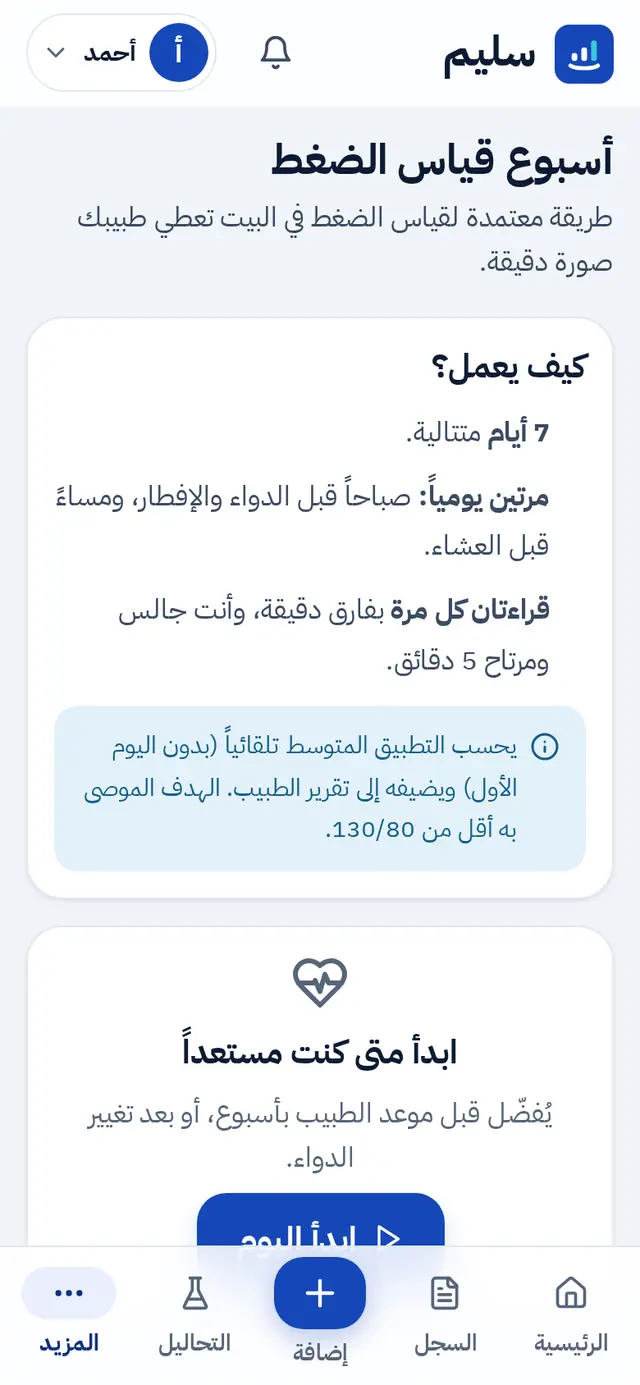
Before a doctor's visit, or when your doctor asks, start the "blood pressure week" from the home screen:
- Seven days, morning and evening.
- Two readings each time; the form asks for two and saves both.
- Saleem guides you session by session and shows how many of the 14 sessions you have done.
- At the end it works out the average, leaving day one out when later days exist, because the first readings are often higher than usual.
- It compares the average with a general home target of below 130/80. Your doctor may set a different target for you.
Ask your doctor whether they would like your readings this way, or on another schedule that suits you.
Take the result to your doctor
The "Doctor report" includes your average, the morning and evening averages, the share of readings on target, the highest reading, and the status of the blood-pressure week. The details are in the doctor visit guide.
When not to wait
If a reading is very high or very low, or you have symptoms such as chest pain, shortness of breath or a sudden severe headache, call emergency services at once. Saleem records numbers; it does not monitor you or send emergency alerts.
Create your account and start your blood-pressure week.